The right wedding dress supports the way you want to feel and move. Start with your setting, your comfort needs, and a realistic total budget; then compare silhouettes in person. A photograph can suggest a direction, but sitting, walking, and lifting your arms tell you much more about whether a gown belongs on your shortlist.
You do not need a fixed bridal identity before the first appointment. Words such as romantic, minimal, architectural, or relaxed are useful starting points rather than rules. Bring a small set of references and note what attracts you in each one: a neckline, a light skirt, a particular sleeve, or the quiet finish of an unembellished fabric.
| Question | What to test |
|---|---|
| Can I move naturally? | Sit, walk, reach, and turn in the actual sample. |
| What needs changing? | Ask a fitter before assuming construction can be altered. |
| What is the full cost? | Include preparation, accessories, and written service fees. |
Begin with the day you are actually planning
Imagine the ordinary movements inside your celebration. You may climb stairs, cross gravel, hug dozens of people, sit through dinner, and dance. A dress that looks beautiful on a platform should also work for those moments. Ask about train management, bustle options, and how the hem behaves with your intended shoes.
Write down three priorities before browsing. For one person, these might be freedom to dance, comfortable shoulder coverage, and a clean neckline. For another, they might be dramatic volume, detailed embroidery, and a detachable overskirt. Keep those priorities visible so a room full of opinions does not replace your own preferences.
Compare silhouettes without body rules
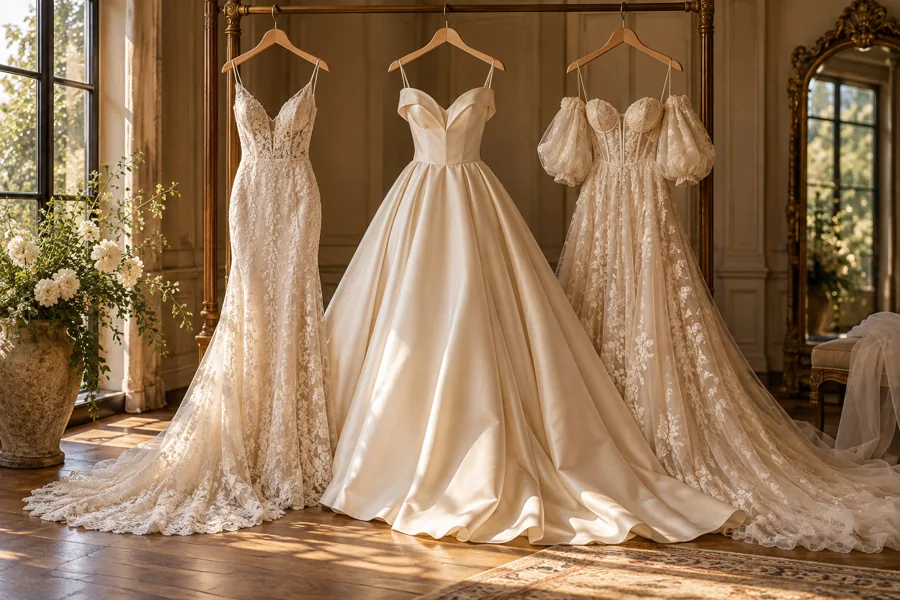
An A-line gown generally opens gradually from the waist. A ball gown creates a fuller skirt. A sheath follows a straighter outline, while a fit-and-flare design stays closer through the body before widening. These labels describe construction, not which bodies deserve which dresses. Individual patterns and alterations can change the experience considerably.
Try one unfamiliar shape alongside your favorites. You may discover that a fuller skirt feels surprisingly light, or that a close silhouette allows less comfortable sitting than expected. Compare garments rather than assuming that every dress within a label behaves alike. Sample sizing can also differ from everyday clothing; ask the stylist to explain fit without treating a number as a verdict.
Read the fabric as well as the shape
Fabric affects weight, movement, transparency, and the way light falls across a dress. Tulle often creates airy volume; satin can give a smooth, reflective surface; crepe may offer a quieter line. Those broad descriptions vary with fiber, lining, and construction. Touch the actual gown and ask which layers will be present in the ordered version.
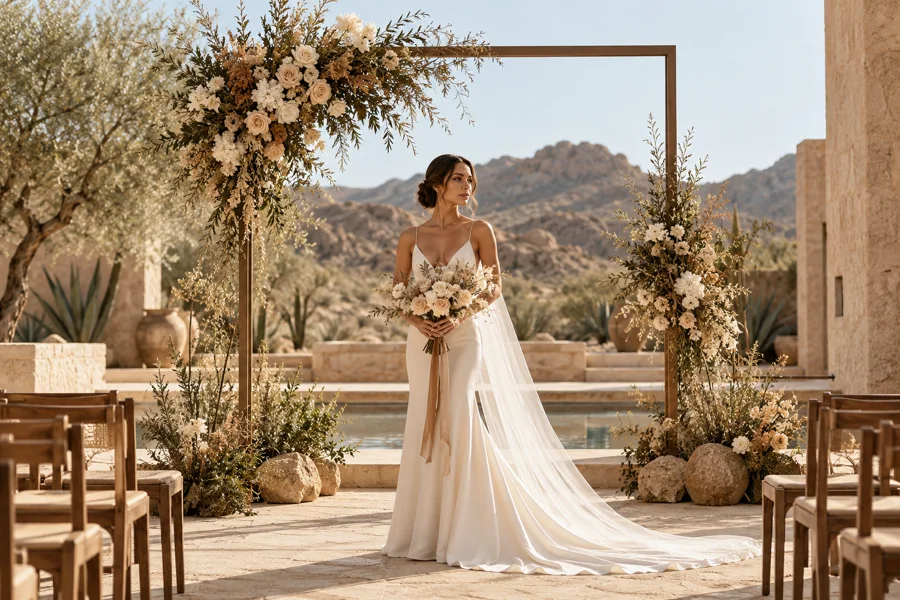
Look at the dress near a window if the boutique permits it. Check how the lining reads in photographs and whether embellishment catches or scratches your skin. For an outdoor Arizona celebration, ask about comfort during the actual time you expect to be outside. A light-looking gown can still contain substantial inner layers.
Make the fitting room a useful experiment
Bring shoes of a similar height to the pair you expect to wear. Ask the boutique about suitable undergarments before your visit. Photograph front, side, and back views only with permission, then take a short video of movement. A still image may hide the way a neckline shifts or a skirt catches around your feet.
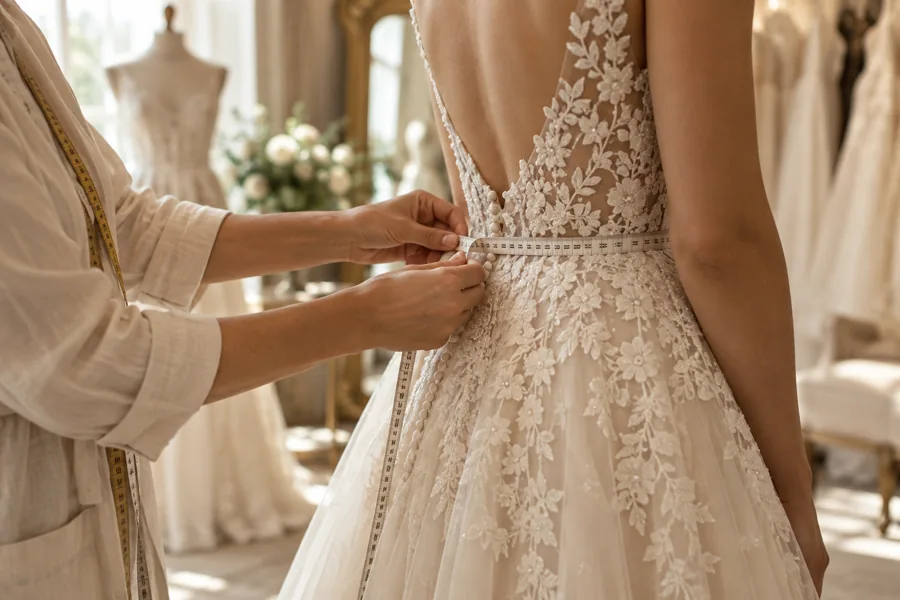
Sit for several minutes, take normal steps, and practice reaching for a hug. Tell the stylist about pressure, slipping, or restricted breathing immediately. A gown should not depend on ignoring discomfort. Ask a qualified alterations professional which changes are feasible before purchasing, especially for neckline reshaping, sleeve additions, or major size adjustments.
Give accessories a supporting role
Start with one detail you want to emphasize. An intricate neckline may need very little jewelry; a simple gown may leave space for a textured veil or sculptural earrings. Try accessories with the dress rather than buying them from separate photographs. Differences in ivory, cream, and white become more visible when pieces sit together.
Think about what you can comfortably wear for hours. Test earring weight, hair accessories, and veil attachment with your planned hairstyle. If you are choosing a long veil, consider its practical role during a windy outdoor ceremony. You can remove it later without needing a second complete outfit.
Set a complete clothing budget
The gown price is only one part of the decision. Ask for written information about alterations, shipping, taxes, storage, pressing, accessories, and any rush charges. Confirm which services are included and which are provided by a separate business. Policies and lead times vary, so use the seller's actual documents rather than a universal shopping calendar.
If a dress exceeds your limit, pause before trying to justify it through imagined savings elsewhere. Compare a simpler version, a sample option, or another construction with the same detail you love. A clear budget helps preserve room for comfortable shoes and skilled fitting, both of which affect the day directly.
Use a small decision sheet
For each finalist, record the total estimated cost, delivery information, alteration questions, movement, and your own reaction before hearing everyone else's. Avoid a numerical beauty contest. A short note such as “comfortable seated, needs neckline advice, love the texture” is more useful than ranking photographs by other people's favorite angle.
Return to your three priorities and choose the gown that meets them with the fewest unresolved compromises. If you still feel uncertain, ask what information would change your decision. Sometimes the next step is an alterations consultation or a quieter appointment, rather than another twenty dresses. Your wedding style can be distinctive without being difficult to wear.
Questions or corrections? Read our editorial policy.